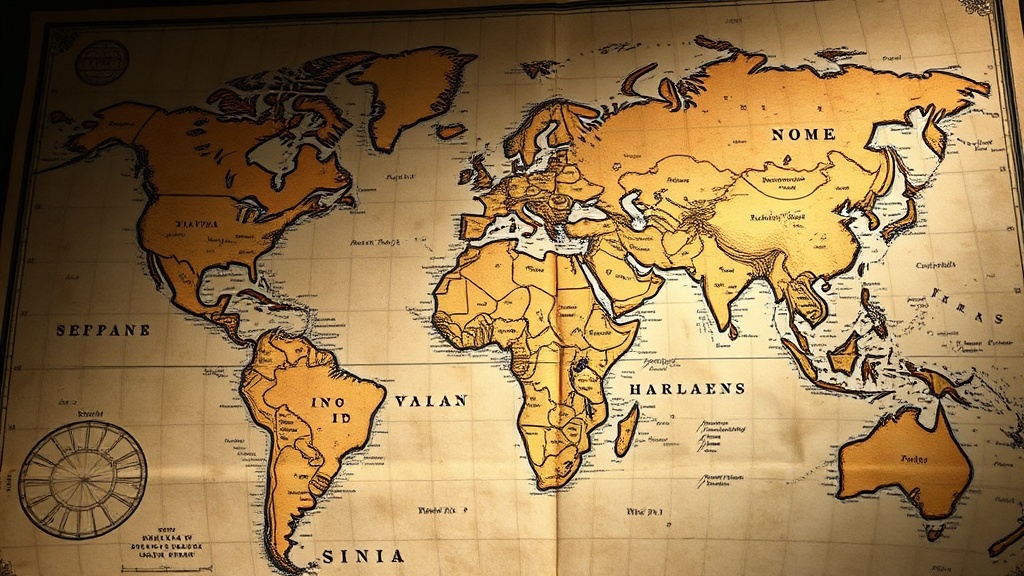
Spotting Authentic Age on Antique World Maps

A single high-quality 16th-century copperplate engraving can be worth more than a luxury sedan, yet many collectors lose thousands of dollars every year by purchasing high-end reproductions disguised as originals. This guide breaks down the physical markers of age, from paper grain to ink depth, so you can distinguish a genuine antique from a clever modern facsimile. We'll look at the chemical signatures of old paper, the way light interacts with hand-colored pigments, and the tell-tale signs of a digital print.
How Can You Tell if a Map is an Original Antique?
The most reliable way to identify an original antique is by examining the physical texture and the presence of a plate mark. A true antique map was printed from a physical plate—usually copper or wood—which leaves a distinct indentation in the paper known as a plate mark. If you run your fingers lightly over the edge of the central image and feel no indentation, you're likely looking at a reproduction.
Look at the paper under a 10x loupe or a high-powered magnifying glass. You aren't just looking for "oldness"; you're looking for the structural DNA of the era. In the 16th through 18th centuries, paper was handmade from linen and cotton rags, not wood pulp. This results in a texture that is much more irregular and durable than modern paper. You might even see "laid lines"—thin, parallel lines created by the wire screen used during the hand-making process. If the paper looks perfectly uniform and smooth under magnification, walk away.
Another major giveaway is the presence of "foxing." Foxing refers to those reddish-brown spots caused by the oxidation of iron or fungal growth on old paper. While some people find them unsightly, for a collector, they are often a sign of genuine age (though they can also be artificially induced by unscrupulous sellers).
Here is a quick checklist for your first inspection:
- The Plate Mark: Is there a visible depression around the map border?
- Paper Texture: Does the paper have a "laid" pattern or irregular fibers?
- Ink Depth: Does the ink sit on top of or within the fibers?
- Smell: Does it have that distinct, slightly musty "old book" scent, or does it smell like fresh ink or chemicals?
What Are the Signs of Hand-Coloring?
Hand-coloring is one of the most beautiful aspects of antique cartography, but it's also where most forgeries happen. In a genuine antique, the color was applied by a human hand using watercolors or gouache after the printing process was complete. This means the color is rarely "perfect."
Check the edges of the colored areas. In a hand-colored map, the pigment often bleeds slightly into the paper fibers or sits slightly unevenly. If you look through a magnifying glass, you shouldn't see a "dot pattern." Modern digital printers use a process called CMYK halftoning, which creates a pattern of tiny, microscopic dots to simulate color. If you see these dots, you're looking at a modern print, not a hand-colored antique. (I've seen many "vintage-looking" maps in antique shops that are actually just high-resolution inkjet prints on heavy paper—don't let them fool you.)
The color itself should also show signs of age. Genuine pigments like verdigris (a green pigment made from copper) can actually "eat" through the paper over centuries, creating a slight brownish discoloration or even a physical thinning of the paper. This is a massive indicator of authenticity.
| Feature | Authentic Antique | Modern Reproduction |
|---|---|---|
| Ink Pattern | Solid, slightly raised or sunken | Microscopic dot pattern (CMYK) |
| Color Application | Varied, hand-painted, slight bleed | Uniform, digital, perfectly consistent |
| Paper Feel | Fibrous, irregular, heavy | Smooth, uniform, often too white |
| Edges | Deckle edges or uneven cuts |
How Do You Spot Artificial Aging?
The most common trick in the book is "artificial aging," where a seller uses tea, coffee, or chemicals to make new paper look old. This is a deceptive practice that can ruin the value of a collection. To spot this, look for the "consistency of the stain." Natural aging usually happens at the edges first, where the paper is most exposed to the air. If the paper is a perfectly uniform tan color from edge to edge, it was likely dyed in a tray.
Check the folds. Many antique maps were part of atlases, meaning they have central folds. A genuine fold will often have some wear or even a small tear where the paper has weakened over centuries. If the "fold" is just a printed line on a flat piece of paper, it's a fake. Furthermore, look for "broken" lines. In a real antique, the ink might crack slightly along a fold line due to the physical stress of being opened and closed over 200 years.
Be wary of "distressed" edges. If the edges look singed or torn to look "ancient," look closer. Real age-related wear is usually subtle. If it looks like it's trying too hard to look old, it probably is. If you're unsure about how to handle a piece you've already acquired, you might want to review how to properly frame and display vintage maps to ensure you aren't causing further damage with improper mounting.
One more thing to watch for: the "smell test." While not scientific, it's a great practical tool. Old paper has a distinct organic scent. If a map smells like chemicals, bleach, or even just "new paper," it's a red flag. Modern paper is often treated with brighteners to make it look white, which can actually be detected by a UV light. If you shine a blacklight on the paper and it glows bright blue/white, it's modern bleached paper. Genuine antique paper will not glow under UV light.
For more technical details on paper-making history, the Wikipedia entry on laid paper provides an excellent breakdown of the manufacturing processes used before the industrial revolution. Understanding this history is your best defense against being misled.
The world of antique cartography is a high-stakes game of observation. It's easy to get caught up in the beauty of a map and forget to look at the technical details. Always use a loupe. Always check the paper texture. And most importantly, never buy an expensive piece without verifying the physical properties of the medium itself. A good collector knows that the most important part of the map isn't the geography—it's the material it's printed on.