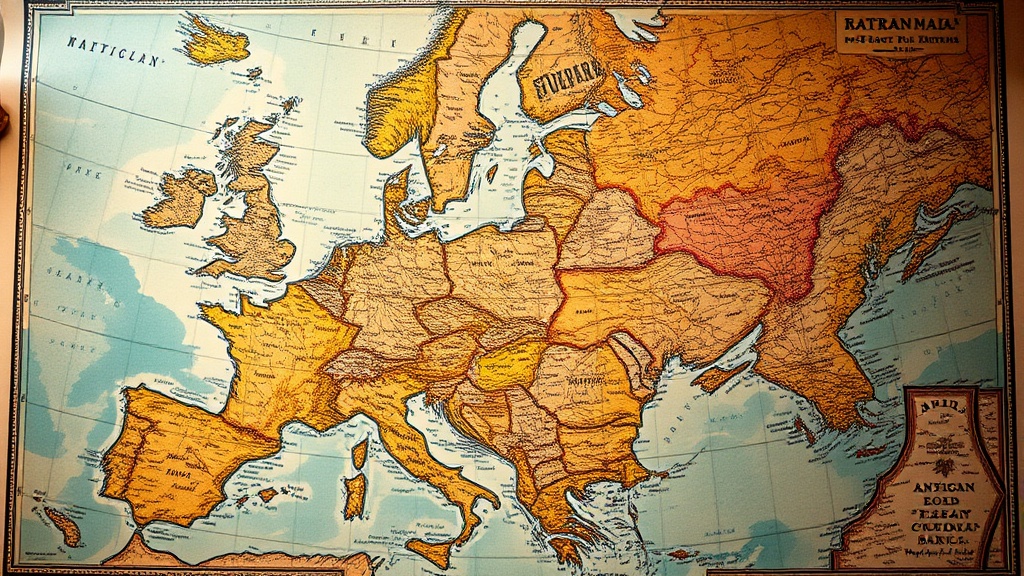
Why Most People Misjudge the Value of Vintage Map Condition

Most collectors assume that a "perfect" map—one without a single crease, foxing spot, or edge tear—is the only way to preserve value. They think a pristine specimen is the gold standard, but that's a mistake. In the world of antique cartography, a map's history is often written in its imperfections. A map that spent a century in a navigator's cabin might have water stains or marginal wear, and these physical traits can actually verify its authenticity and historical context. If you're looking for a map that looks like it was printed yesterday, you're likely looking at a reproduction, not a piece of history.
Understanding how condition affects value requires moving past the idea of "flawless" and toward the idea of "originality." We're talking about the difference between a map that has aged naturally and one that has been damaged by poor storage. One is a mark of a life well-lived; the other is a loss of value. This guide breaks down how to look at the physical state of your collection through a realistic lens.
What is the difference between natural aging and damage?
Distinguishing between natural aging and actual damage is the first step in evaluating any vintage map. Natural aging often manifests as foxing—those small, brownish spots caused by fungal growth or metallic impurities in the paper. While some collectors find them distracting, a light amount of foxing is a common sign of age in 18th and 19th-century papers. It's part of the item's story.
On the other hand, damage is often the result of human error or environmental neglect. Here are a few things to watch out for:
- Acid Burn: This occurs when a map is placed against non-acid-free backing. The paper turns brittle and brown along the edges.
- Tears and Losses: A tear along a fold line is common, but a tear through the center of a cartouche is a significant issue.
- Surface Scratches: These often happen when a map is rolled too tightly or handled without care.
- Insects: Small holes (often called "wormholes") can indicate that the map was stored in a damp or poorly controlled environment.
If you're curious about the chemistry of paper aging, the Library of Congress preservation guides offer excellent technical breakdowns of how materials degrade over time.
Does a folded map lose its worth?
There is a persistent myth that a map must be flat to be valuable. In reality, many of the most significant maps in history were printed as part of an atlas, meaning they were meant to be folded. A map with center folds or even multiple folds is not inherently less valuable than a flat one. In fact, seeing the original fold lines can help confirm that a map hasn't been artificially flattened or chemically treated to look newer.
The real question isn't whether the map is folded, but whether the folds have caused structural failure. If the paper is splitting at the creases or if pieces of the margin are actually missing due to the fold, the value drops. A map that is folded but structurally sound is a fine specimen. A map that is torn because it was folded too sharply is a damaged specimen.
"The history of a map is etched in its creases. A fold is not a flaw; it is a record of how the map was used and carried."
When you're looking at a map in a shop or an online auction, check the center fold under a bright light. If you see light passing through a gap in the paper, that's a structural issue. If it's just a crease, don't worry about it.
How much does condition actually affect the price?
Condition is subjective, but the market is quite decisive. A map in "Fine" condition will always command a premium over one in "Good" condition, but the gap isn't always as wide as you might expect. For example, a rare 16th-century map with significant foxing might still sell for much more than a common 19th-century map in perfect condition. Rarity and the quality of the engraving often outweigh the state of the paper.
To understand the hierarchy of condition, use this general framework:
| Condition Grade | Typical Characteristics |
|---|---|
| Fine/Mint | No visible flaws, crisp edges, bright colors, no tears. |
| Very Good | Minor foxing or small creases, but no loss of paper or major tears. |
| Good | Visible wear, some staining, or small tears at the margins. |
| Fair/Poor | Major structural issues, heavy staining, or large missing sections. |
It's also worth noting that colorization affects value. Hand-colored maps are generally more desirable than black-and-white maps. However, if the color is modern (applied recently to an old map to make it look more attractive), it can actually hurt the value by making the item less "original." If you want to see how professional conservators treat these issues, the American Institute for Conservation provides resources on the science of preservation.
When you're buying, don't be afraid to ask the seller for high-resolution photos of the corners and the center fold. If they won't provide them, they might be hiding a flaw. A transparent seller will always show you the "ugly" parts of the map. This is part of the game. You're not just buying a piece of paper; you're buying a piece of history, and that history includes every smudge and wrinkle.
If you're looking to display these items, remember that even a "imperfect" map needs protection. A map with significant foxing or brittle edges should never be framed in a way that puts pressure on the paper. Always use archival-grade materials to ensure your collection survives another century.