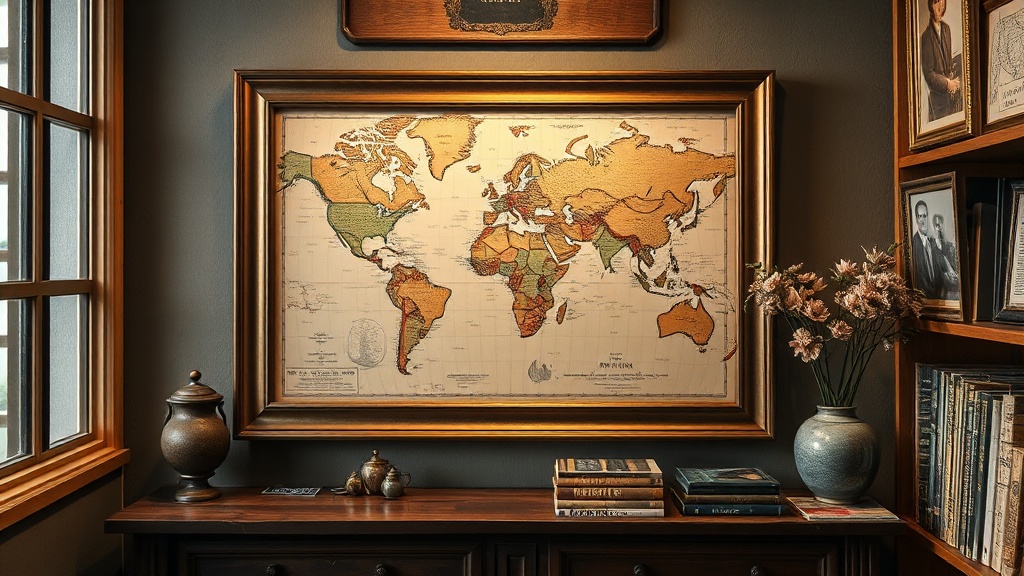
Selecting the Right Frames for Vintage Paper and Maps

Imagine walking into a high-end antique shop, spotting a breathtaking 18th-century copperplate engraving, and bringing it home only to realize your standard wooden frame is slowly destroying it. You notice a faint, yellowish discoloration creeping around the edges of the paper—the telltale sign of acid migration. This isn't just an aesthetic issue; it's a chemical reaction. When you frame a piece of history, you aren't just choosing a border; you're choosing its long-term survival. This guide looks at the technical side of framing to ensure your collection stays preserved rather than deteriorating under glass.
Is acid-free matting actually necessary for old maps?
The short most frequent question I get from new collectors is whether that expensive, heavy-duty matting truly makes a difference. The short answer is yes. Standard cardboard mats found at big-box retailers are often highly acidic. Over time, the lignin in cheap paper breaks down, releasing acids that turn your beautiful map yellow or even brittle. When you use acid-free (or archival-grade) mats, you're providing a buffer. This buffer prevents the paper from reacting with the environment and the frame itself.
If you're looking at a piece with significant value, you shouldn't settle for anything less. A high-quality mat doesn't just look better—it provides a structural gap. This gap ensures the paper doesn't touch the glass directly. If moisture ever enters the room, it can condense on the glass; if the paper is touching that glass, it'll stick and eventually mold or rot. A properly spaced mat creates a tiny air pocket that acts as a shield. You can check the standards for museum-quality materials via the American Institute for Conservation to see why material choice is so vital.
Think of the mat as a frame within a frame. It provides visual breathing room, making the map the center of attention. Without it, the map can look "cramped" or swallowed by the frame. For collectors, this isn't just about looks—it's about the physics of preservation. Even a simple white mat can hide minor edge wear, but a high-quality, 100% cotton rag mat is what keeps the fibers stable for decades.
Should I use glass or acrylic for my collection?
This is where many collectors make a costly mistake. You might be tempted to go with standard glass because it's cheap and easy to find, but there are better options. Standard glass offers zero protection against UV rays. Sunlight is the enemy of pigment. If your map is hanging in a room with even indirect sunlight, UV rays will bleach the ink and fade the colors in a surprisingly short time. This isn't a slow process; it can happen in just a few years if the exposure is high.
When choosing between glass and acrylic (often called Plexiglass), consider these three factors:
- UV Protection: Museum-grade acrylic or UV-filtering glass is a must. It blocks up to 99% of harmful rays.
- Weight: Large-scale maps can be incredibly heavy. Acrylic is much lighter and less likely to crack under the weight of a large frame.
- Fragility: Glass can shatter. If you have kids or pets, or if the frame is in a high-traffic hallway, acrylic is the safer, more durable choice.
If you're working with a particularly delicate piece, I always suggest looking into museum glass. It's more expensive, but it's virtually invisible. It reduces reflections so much that it feels like there's nothing between you and the map. It's a different experience entirely. For more on the chemical properties of light and its effect on paper, the Library of Congress provides excellent resources on document preservation.
What are the best ways to hang vintage maps safely?
How you hang the piece is just as important as the frame itself. You might think a simple nail in the wall is enough, but if your frame is heavy, you need to consider the mounting hardware. A poorly secured frame is a liability. If it falls, the impact with the floor can shatter even the best UV-protective glass, and the shock can tear the fragile paper. I recommend using professional-grade hanging wires rather than just a single hook. A wire allows the frame to distribute its weight more evenly across the back structure.
Another thing to watch out for is the "hanging height." You don't want the frame to be too close to a ceiling or a vent. Heat from a ceiling or cold air from an HVAC vent can create micro-climates. These temperature shifts cause the paper to expand and contract, which leads to warping. A map that is perfectly flat one day might be wavy the next if the room's humidity and temperature aren't stable. It's a constant battle against the elements.
Lastly, never use tape to secure the map inside the frame. I've seen many beginners try to tape the edges of a map to the backing board. This is a disaster waiting to happen. The adhesive in standard tape is incredibly aggressive. It will leave permanent stains and can even tear the paper if you ever try to remove it. Instead, use archival-grade hinges or Japanese tissue hinges with wheat starch paste. This method is reversible, which is a golden rule in the world of preservation. If a method isn't reversible, it shouldn't be used on an antique.
A well-framed map is a legacy. A poorly-framed map is just a piece of decaying paper. When you invest in the right materials, you're telling the world that this object has value. It's about respect for the history and the craft that went into creating it. Whether you're a seasoned collector or just starting out, take the time to do it right the first time. It's much harder (and more expensive) to fix damage than it is to prevent it.