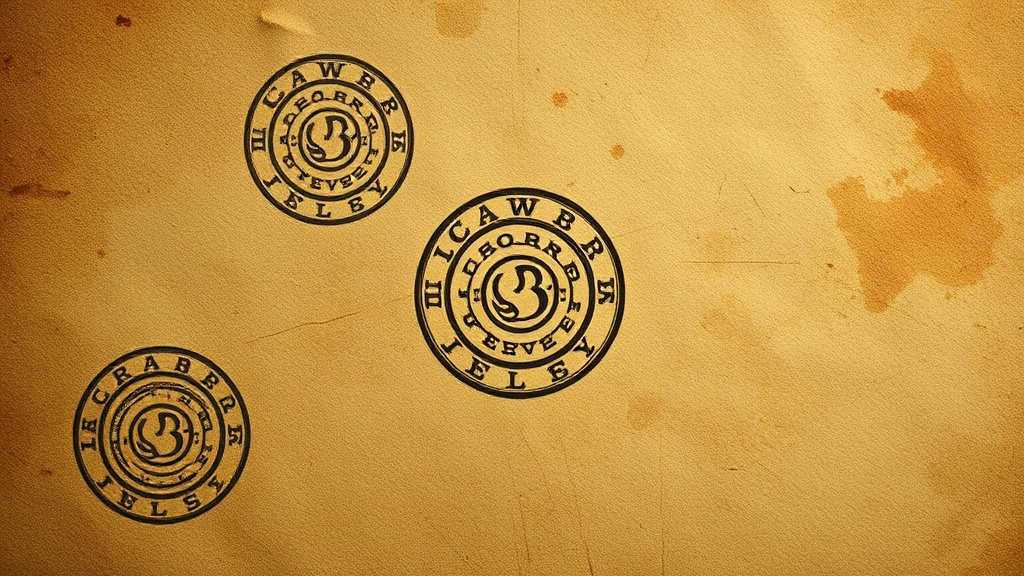
Identifying Watermarks in Antique Paper

Quick Tip
Hold your map up to a strong, single-point light source to reveal hidden watermarks and manufacturer marks.
Many collectors assume that a watermark is just a random mark left by the paper manufacturer, but it's actually a vital piece of forensic evidence. Identifying these marks helps you date a document and verify its authenticity. If you're holding a map you think is from the 1700s, the watermark is often the only way to prove it isn't a high-quality modern reproduction.
How do I see a watermark in paper?
You can see a watermark by holding the paper up to a strong, direct light source or by using a light box. The watermark is a thinning of the paper fibers, which allows more light to pass through the design. If you're struggling to see it, try laying the paper flat on a dark surface and shining a light through the back.
Sometimes, a simple way to make it pop is to use a transmitted light technique. If the paper is particularly thick or has heavy ink coverage, you might need a professional-grade light table. It's worth noting that some watermarks are "laid lines" (thin lines from the paper-making process) rather than true watermarks—don't confuse the two.
What are the most common types of watermarks?
Watermarks generally fall into three categories: manufacturer marks, decorative motifs, and date marks. Understanding these helps you differentiate between a maker's stamp and a genuine historical dating device.
- Proving Marks: Often a family crest or a company logo (like the Wikipedia entry on watermarks explains).
- Geometric Patterns: Vergilines or "laid lines" that appear as subtle grids.
- Date Marks: Specific numbers or symbols used to denote the year of production.
I've seen plenty of collectors get tripped up by "faux" watermarks on modern reproductions. These are often printed onto the surface rather than being part of the paper structure itself. To check, look at the texture—a real watermark is a structural change in the paper, not a printed image.
Can watermarks help date a map?
Yes, watermarks are one of the most reliable tools for dating paper because paper mills often updated their designs or changed their logos over time. By matching a specific emblem to a known production period, you can narrow down a map's age significantly.
| Watermark Feature | What it suggests |
|---|---|
| Crown & Shield | Often associated with official government or royal production. |
| Single Initials | Common in smaller, regional paper mills. |
| Repeated Symbols | Often used for branding or decorative "security" patterns. |
If you're working with high-end pieces, you should also consider proper lighting techniques to avoid damaging the paper while inspecting it. Using a bright, direct flashlight can sometimes cause heat stress on fragile, aged fibers—be careful.
The research process is rarely a straight line. You might find a mark that looks like a lion, only to realize later it's a specific type of heraldic crest used by a single mill in the 1600s. Keep a magnifying glass handy; the details are often microscopic.